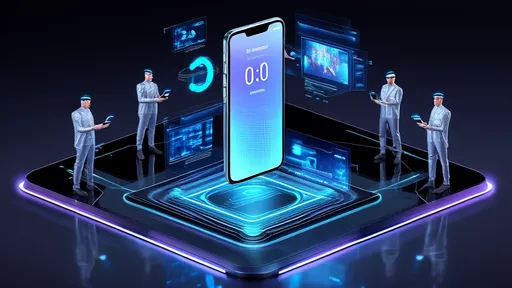
The world of mobile technology has taken another monumental leap forward with the recent unveiling of a 6G smartphone prototype. This groundbreaking development promises to revolutionize how we interact with digital content, with one of the most staggering claims being the ability to download a full 4K movie in just 0.1 seconds. While 5G networks are still being rolled out globally, researchers and tech giants are already pushing the boundaries of what's possible with next-generation connectivity.
Breaking the Speed Barrier
The demonstration of this 6G prototype has sent shockwaves through the tech industry. Current 5G networks, which seemed impossibly fast when first introduced, now appear sluggish in comparison. The 0.1-second movie download isn't just a theoretical maximum speed achieved in laboratory conditions - engineers claim this will be typical real-world performance once 6G networks are fully deployed. This represents approximately a 100-fold improvement over the fastest current 5G implementations.
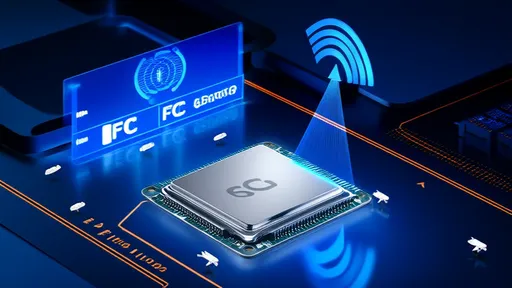
What makes this speed possible is a combination of several technological breakthroughs. The prototype utilizes terahertz wave spectrum, which operates at significantly higher frequencies than current cellular technologies. Additionally, advanced beamforming techniques and AI-powered network optimization allow for more efficient data transmission. Perhaps most importantly, the device incorporates revolutionary new antenna designs that can handle these extreme frequencies without sacrificing signal reliability.
Implications Beyond Just Speed
While the headline-grabbing download speeds are impressive, the true significance of this 6G prototype extends far beyond how quickly you can download movies. The ultra-low latency (estimated at less than 1 millisecond) opens up possibilities for applications we can barely imagine today. Real-time holographic communications, immersive augmented reality experiences indistinguishable from physical reality, and instant cloud computing that feels local are all within reach.
The medical field stands to benefit tremendously from this technology. Imagine surgeons performing delicate operations remotely with zero perceptible delay, or emergency medical technicians receiving real-time guidance from specialists during critical situations. The combination of high bandwidth and imperceptible latency could make physical distance irrelevant for many professional applications.
The Road to Commercialization
Despite the excitement surrounding this prototype, industry experts caution that widespread 6G adoption remains several years away. The current demonstration represents what engineers call a "proof of concept" - it verifies that the technology works, but significant challenges remain in making it practical for everyday use. Infrastructure requirements will be substantial, requiring dense networks of small cells and potentially entirely new approaches to network architecture.
Battery life presents another hurdle. The prototype currently requires substantial power to maintain those blistering speeds, making energy efficiency a key focus for ongoing development. Researchers are exploring various solutions, including more efficient chipsets, advanced power management algorithms, and even harvesting ambient energy from radio waves.
Global Race for 6G Dominance
The unveiling of this prototype has intensified the already fierce international competition to lead in 6G development. Several countries and corporate consortia have announced ambitious 6G initiatives, with projected deployment timelines ranging from 2028 to 2030. The stakes are high, as leadership in this space could determine which nations and companies set the standards that will shape global communications for decades to come.
Standardization efforts are already underway, though consensus remains elusive on many technical specifications. Unlike previous generational transitions, 6G development is occurring alongside rather than after widespread 5G deployment, creating unique challenges for researchers and policymakers attempting to future-proof current infrastructure investments.
Consumer Expectations and Market Readiness
As news of this prototype spreads, consumer expectations are beginning to outpace technological reality. Industry analysts warn against expecting 6G-capable smartphones in stores anytime soon. The ecosystem required to support 6G - from network infrastructure to compatible applications - will take years to develop fully. Moreover, questions remain about what killer applications will emerge to justify the transition from 5G to 6G for average consumers.
That said, the potential is undeniable. Beyond the obvious benefits of faster speeds, 6G promises to enable entirely new categories of devices and services. The line between physical and digital may blur as high-fidelity, real-time virtual interactions become commonplace. The prototype's demonstration serves as both an exciting glimpse of the future and a reminder of how much work remains to make that future accessible to everyone.
The development team behind this 6G prototype emphasizes that their work represents just the beginning. As research continues, we can expect to see even more impressive demonstrations of what next-generation wireless technology can achieve. One thing is certain: the way we connect, work, and entertain ourselves is poised for another seismic shift in the coming decade.

By /Aug 14, 2025

By /Aug 14, 2025
By /Aug 14, 2025

By /Oct 20, 2025

By /Oct 20, 2025

By /Aug 14, 2025
By /Oct 20, 2025

By /Aug 14, 2025

By /Oct 20, 2025

By /Aug 14, 2025

By /Aug 14, 2025

By /Aug 14, 2025

By /Oct 20, 2025
By /Aug 14, 2025

By /Aug 14, 2025
By /Aug 14, 2025
By /Oct 20, 2025

By /Oct 20, 2025

By /Aug 14, 2025
