In a bold move signaling its long-term strategic priorities, Google’s parent company Alphabet has announced a sweeping reorganization, positioning artificial intelligence (AI) and quantum computing as the twin pillars of its future. Dubbed "Alphabet 2.0," the restructuring reflects a decisive shift away from its traditional internet services roots toward cutting-edge technologies that promise to redefine industries. The restructuring follows years of internal debates about Alphabet’s sprawling portfolio and how best to allocate resources in an era where AI and quantum advancements are accelerating.
The new structure will see several of Alphabet’s ancillary businesses either spun off, merged, or deprioritized to free up capital and talent for its AI and quantum initiatives. While Google Search, YouTube, and Android remain central to the company’s revenue streams, their operations will now function under a leaner, more focused umbrella. Meanwhile, DeepMind, Google’s AI research division, will take on an expanded role, absorbing several smaller AI teams across the organization to eliminate redundancies and accelerate breakthroughs.
AI: The New Operating System of Alphabet
Under Alphabet 2.0, AI is no longer just a tool—it’s the backbone of the entire enterprise. DeepMind, once a semi-autonomous research lab, will now oversee AI integration across all Alphabet subsidiaries, from Waymo’s autonomous vehicles to Google Cloud’s enterprise solutions. The goal is to create a unified AI framework that can be adapted and scaled for diverse applications, reducing the silos that have historically slowed innovation.
Industry analysts see this as a direct response to the meteoric rise of competitors like OpenAI and Anthropic, which have leveraged focused AI strategies to challenge Google’s dominance in machine learning. By consolidating its AI efforts, Alphabet aims to streamline decision-making and foster faster deployment of generative AI, large language models, and robotics technologies. Early projects include an AI-powered overhaul of Google Search, a next-generation virtual assistant, and AI-driven drug discovery collaborations with pharmaceutical giants.
Quantum Computing: Betting on the Next Revolution
If AI is Alphabet’s immediate priority, quantum computing represents its moonshot. The newly formed "Quantum Futures" division will combine Google’s existing quantum research teams with talent from its now-defunct "Other Bets" projects, such as the high-profile but ultimately shelved Loon internet balloons. Alphabet’s leadership believes quantum computing, though still in its infancy, could unlock breakthroughs in cryptography, materials science, and climate modeling that classical computers cannot achieve.
Sources within the company suggest that Alphabet is preparing to unveil a 1,000-qubit quantum processor by 2025, a milestone that would position it ahead of IBM and Honeywell in the race for quantum supremacy. While practical applications remain years away, Alphabet is hedging its bets by partnering with governments and academia to explore quantum-safe encryption and optimization algorithms for industries like finance and logistics.
Streamlining for the Future
The restructuring isn’t just about doubling down on high-tech—it’s also about cutting loose dead weight. Alphabet’s infamous "Other Bets" category, which once housed ambitious but unprofitable ventures like Verily (life sciences) and Makani (energy kites), will be dramatically scaled back. Some projects will be spun off as independent companies with Alphabet retaining minority stakes, while others will be shuttered entirely. Employees in affected divisions have already been offered transfers to AI or quantum teams, though layoffs are expected in overlapping administrative roles.
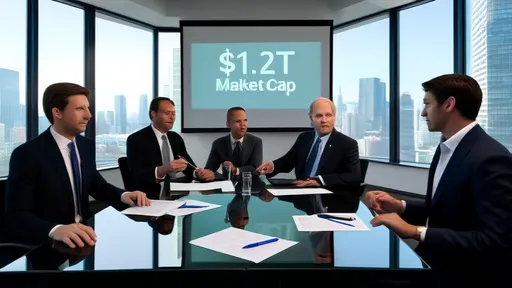
Wall Street has largely applauded the move, with Alphabet’s stock rising 5% on the announcement. Investors see the reorganization as a necessary step to maintain the company’s edge in an increasingly competitive tech landscape. However, skeptics warn that Alphabet’s newfound focus could come at the cost of the creative risk-taking that birthed innovations like Gmail and Google Maps. Only time will tell whether Alphabet 2.0’s gamble on AI and quantum computing will pay off—or if the company has traded one set of challenges for another.
By /Aug 14, 2025

By /Aug 14, 2025
By /Aug 14, 2025

By /Oct 20, 2025

By /Oct 20, 2025

By /Aug 14, 2025
By /Oct 20, 2025

By /Aug 14, 2025

By /Oct 20, 2025
By /Aug 14, 2025
By /Aug 14, 2025

By /Aug 14, 2025
By /Oct 20, 2025
By /Aug 14, 2025
By /Aug 14, 2025
By /Aug 14, 2025
By /Oct 20, 2025
By /Oct 20, 2025
By /Aug 14, 2025
