The European Union has unveiled an ambitious €20 billion investment plan to accelerate the development of 6G technology, marking its boldest move yet to break the growing US-China duopoly in next-generation telecommunications and establish Europe as a leader in future network infrastructure.
This massive funding initiative, approved by the European Commission last week, represents a strategic pivot in the global tech race. Europe appears determined to avoid repeating its 5G experience, where it largely became a battleground for Chinese equipment makers and American tech giants rather than nurturing its own champions.
The EU's 6G push comes at a critical juncture in the geopolitical tech landscape. With China having made substantial progress in 5G deployment through Huawei and ZTE, and the United States mobilizing its tech titans like Qualcomm and Intel for next-gen networks, Europe risks being squeezed out of the value chain entirely unless it establishes its own competitive ecosystem.
"This isn't just about faster download speeds or lower latency," said Margrethe Vestager, Executive Vice-President of the European Commission for A Europe Fit for the Digital Age. "6G represents the foundational infrastructure for Europe's digital sovereignty. The networks of the future will carry everything from autonomous transportation signals to sensitive government communications - we cannot outsource this critical infrastructure."
The €20 billion package will be distributed across three key pillars: €8 billion for fundamental research through Horizon Europe programs, €7 billion for applied research and development via the newly established Smart Networks and Services Joint Undertaking, and €5 billion for infrastructure deployment and standardization efforts. This multi-pronged approach aims to create a complete European 6G ecosystem from lab to market.
European tech firms have welcomed the funding boost. Nokia CEO Pekka Lundmark stated, "This commitment positions Europe to lead in defining 6G standards rather than adopting them from elsewhere. With coordinated effort across member states, we can build networks that reflect European values around privacy, security and sustainability."
The initiative builds on Europe's existing strengths in telecommunications research. Several EU countries already host world-leading institutions working on advanced network technologies, including Finland's 6G Flagship program at the University of Oulu and Germany's 6G Research Hub. The new funding will expand these efforts while fostering greater collaboration across borders.
However, the road to 6G leadership won't be easy. China has reportedly invested over $100 billion in 6G research through state-backed programs, while the US has allocated nearly $15 billion via initiatives like the Next G Alliance. Europe's €20 billion, while substantial, still trails these figures when accounting for the fragmentation of effort across 27 member states.
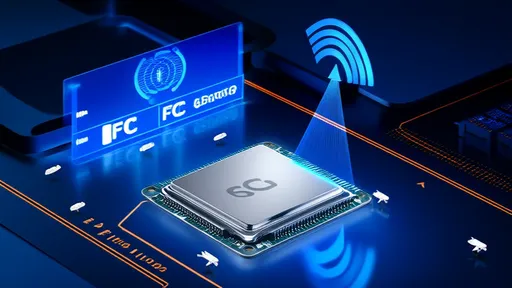
Another challenge lies in Europe's relatively weak position in semiconductor manufacturing, a critical enabler for 6G hardware. The EU's recently announced Chips Act aims to address this gap, but building competitive fabrication capabilities will take years. "You can't have network leadership without chip leadership," noted an industry analyst speaking on condition of anonymity. "Europe needs to move quickly on both fronts."
The geopolitical implications of Europe's 6G push are significant. By developing its own standards and technologies, the EU hopes to reduce dependence on both Chinese equipment and American cloud providers. This aligns with broader efforts like the Digital Markets Act and Digital Services Act, which seek to rebalance power in the digital economy.
Critics argue that Europe may be too late to the game. "The US and China already have working 6G prototypes," said a technology policy researcher at a Brussels think tank. "Europe is playing catch-up in a race where the leaders have massive first-mover advantages in both technology and market access."
Proponents counter that 6G remains sufficiently far from commercialization - expected around 2030 - that Europe still has time to establish competitive alternatives. They point to Europe's strong research tradition and the potential to differentiate through technologies like AI-powered network optimization or quantum-secured communications.
The funding announcement has already sparked debate about how to allocate resources most effectively. Some member states advocate concentrating funds in existing centers of excellence, while others push for broader distribution to avoid creating new regional disparities. The European Commission will need to balance these competing interests while maintaining focus on the strategic objective.
Industry observers will be watching several key indicators in coming months: which consortia form to bid for research funds, whether major European telecom operators commit to trials, and how quickly standardization work progresses through ETSI and other bodies. Early signs suggest strong interest from both established players like Ericsson and startups working on niche 6G applications.
Beyond the technological race, Europe's 6G initiative reflects a growing recognition that network infrastructure has become a geostrategic asset. The EU appears determined to avoid a repeat of the 5G era's controversies over Huawei equipment and subsequent security concerns. By taking control of its technological destiny, Europe hopes to chart a middle course between American and Chinese models.
Success is far from guaranteed. The program will face challenges ranging from bureaucratic delays to talent shortages in key technical fields. Moreover, the €20 billion represents just the EU-level commitment - member states and private sector partners will need to contribute substantially more to create a truly competitive position.
As the global tech cold war intensifies, Europe's 6G gambit represents one of its most ambitious attempts to secure digital sovereignty. The coming years will reveal whether this investment can overcome structural disadvantages and establish Europe as a third pole in the increasingly bifurcated world of advanced telecommunications.
The stakes couldn't be higher. In an era where economic power, military capability and political influence increasingly depend on technological leadership, control over next-generation networks may determine which powers shape the 21st century digital order. Europe has now placed its €20 billion bet that it can be among them.

By /Aug 14, 2025

By /Aug 14, 2025
By /Aug 14, 2025

By /Oct 20, 2025
By /Oct 20, 2025

By /Aug 14, 2025
By /Oct 20, 2025

By /Aug 14, 2025

By /Oct 20, 2025

By /Aug 14, 2025

By /Aug 14, 2025

By /Aug 14, 2025

By /Oct 20, 2025
By /Aug 14, 2025

By /Aug 14, 2025
By /Aug 14, 2025
By /Oct 20, 2025
By /Oct 20, 2025
By /Aug 14, 2025
