China has taken a monumental leap in the realm of secure communications with the establishment of the world’s first "unhackable" quantum communication network integrated with 6G technology. This groundbreaking achievement marks a significant milestone in the race to develop ultra-secure and high-speed communication systems, positioning China at the forefront of next-generation technological innovation.
The fusion of 6G and quantum communication technologies has long been theorized as the holy grail of secure data transmission. Unlike traditional encryption methods, which rely on complex mathematical algorithms vulnerable to future quantum computing attacks, quantum communication leverages the principles of quantum mechanics to ensure unparalleled security. By encoding information in quantum bits (qubits), any attempt to intercept or eavesdrop on the transmission inevitably alters the quantum state, alerting both sender and receiver to the breach.
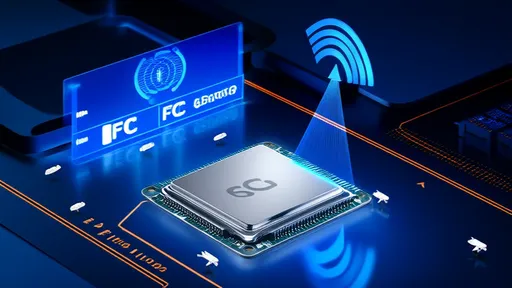
The backbone of this revolutionary network lies in China’s advancements in quantum key distribution (QKD), a method that enables two parties to produce a shared random secret key known only to them. Coupled with the ultra-low latency and high bandwidth promised by 6G, this network not only guarantees security but also delivers unprecedented speeds and reliability. Early tests have demonstrated the system’s ability to transmit sensitive government and financial data across thousands of kilometers without a single instance of compromise.
What sets this initiative apart is its scalability and real-world applicability. Previous quantum communication experiments were limited to controlled laboratory environments or short-distance links. China’s network, however, spans multiple cities, connecting key infrastructure such as government agencies, military installations, and financial institutions. This practical deployment underscores the country’s commitment to transitioning theoretical breakthroughs into tangible infrastructure.
Experts worldwide are hailing this development as a game-changer, not just for cybersecurity but for the future of global communication standards. The integration of 6G ensures that the network isn’t just secure but also capable of handling the exponential growth in data traffic expected in the coming decades. With the Internet of Things (IoT), artificial intelligence, and smart cities relying increasingly on robust and secure networks, China’s achievement could set a new benchmark for other nations to follow.
However, the project hasn’t been without its challenges. Quantum communication systems are notoriously sensitive to environmental interference, requiring sophisticated error-correction mechanisms and stable conditions. The successful deployment across diverse urban landscapes speaks volumes about the engineering prowess behind the initiative. Moreover, the marriage of 6G and quantum technologies demanded innovations in hardware miniaturization and energy efficiency, hurdles that Chinese researchers appear to have overcome.
The geopolitical implications of this breakthrough are equally profound. As nations grapple with escalating cyber threats and data espionage, a secure communication infrastructure could redefine diplomatic and military strategies. China’s early lead in this domain may prompt other superpowers to accelerate their own quantum and 6G programs, potentially sparking a new wave of technological rivalry.
For now, the focus remains on refining and expanding the network. Plans are already underway to integrate satellite-based quantum communication, which would extend the system’s reach to remote and maritime regions. Commercial applications are also being explored, with industries such as healthcare and logistics standing to benefit from hack-proof data transmission.
While skeptics question the long-term feasibility of maintaining such an intricate system, the success of China’s "unhackable" network serves as a bold statement of intent. In an era where data is the new currency, the ability to transmit it securely and swiftly could very well dictate the balance of power in the 21st century.

By /Aug 14, 2025

By /Aug 14, 2025
By /Aug 14, 2025

By /Oct 20, 2025

By /Oct 20, 2025

By /Aug 14, 2025

By /Oct 20, 2025

By /Aug 14, 2025

By /Oct 20, 2025

By /Aug 14, 2025

By /Aug 14, 2025

By /Aug 14, 2025

By /Oct 20, 2025
By /Aug 14, 2025

By /Aug 14, 2025
By /Aug 14, 2025

By /Oct 20, 2025

By /Oct 20, 2025

By /Aug 14, 2025
