The idea that memories can be passed down through DNA—often referred to as "genetic memory" or "transgenerational epigenetic inheritance"—has long captured the public imagination. From science fiction to pop psychology, the notion that our ancestors' experiences might be etched into our genes persists as a tantalizing possibility. But what does the science actually say? Is there any credible evidence that memories can be inherited biologically, or is this just another myth dressed up in scientific jargon?
The Origins of the DNA Memory Myth
The concept of inherited memory isn’t new. Early 20th-century psychologists like Carl Jung proposed the idea of a "collective unconscious," suggesting that certain memories and archetypes are hardwired into humanity’s genetic code. Later, fringe theories in the Soviet Union under Trofim Lysenko pushed the idea that acquired traits—including learned behaviors—could be passed to offspring, though this was later debunked as pseudoscience. More recently, the rise of epigenetics has reignited speculation about whether environmental experiences, including trauma, might leave molecular marks on DNA that influence future generations.
Epigenetics, the study of changes in gene expression without altering the underlying DNA sequence, has been misinterpreted by some as proof of memory inheritance. While it’s true that environmental factors like stress or diet can modify how genes are activated or silenced, these changes are not the same as storing discrete memories. The leap from "genes can be influenced by environment" to "your grandfather’s fear of spiders is encoded in your DNA" is a dramatic—and scientifically unsupported—one.
The Science Behind Epigenetic Inheritance
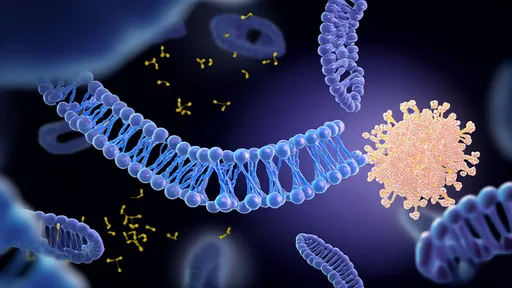
To understand why the "DNA memory" claim falls apart, we need to examine how epigenetic inheritance actually works. Certain chemical tags, such as methyl groups, can attach to DNA and affect whether a gene is turned on or off. These modifications can sometimes be passed from parent to child, but they are usually reset during embryonic development. Even when they persist, they influence broad physiological traits—like stress response or metabolism—not specific memories or learned behaviors.
Studies on animals have shown limited cases of transgenerational epigenetic effects. For example, mice exposed to a particular smell paired with electric shocks produced offspring that were more sensitive to that odor. However, this was a generalized fear response, not a detailed memory. Moreover, these experiments are often conducted under extreme laboratory conditions that don’t reflect natural human experiences. There is no evidence that complex human memories—like remembering a face or a personal event—can be transmitted genetically.
Why the Myth Persists
Despite the lack of concrete evidence, the idea of genetic memory continues to thrive in popular culture. Part of its appeal lies in its narrative power: the thought that we carry our ancestors’ struggles and triumphs inside us is emotionally compelling. It also offers a pseudo-scientific explanation for phenomena like déjà vu or unexplained phobias, providing a sense of mystery where none may exist.
Misreporting in the media has further muddied the waters. Headlines like "Scientists Prove Memories Can Be Inherited" often oversimplify or exaggerate findings, leaving readers with the wrong impression. In reality, no credible study has demonstrated that lived experiences—in the way we commonly understand memories—are stored in DNA and passed to descendants.
The Verdict: Separating Fact from Fiction
While epigenetics has revealed fascinating ways our environment interacts with our genes, the leap to "memory inheritance" remains science fiction. The mechanisms required to encode, store, and retrieve complex memories in DNA simply don’t exist. Memories are formed through neural connections in the brain, not chemical tags on genes. Any claims suggesting otherwise are either misinformed or deliberately sensationalized.
That said, research into epigenetics is still young, and scientists are uncovering new layers of complexity in how genes and environment interact. But for now, the idea that your DNA contains your great-grandmother’s recollection of her first kiss is a romantic notion—not a scientific reality.

By /Aug 7, 2025
By /Aug 7, 2025
By /Aug 7, 2025
By /Aug 7, 2025
By /Aug 7, 2025
By /Aug 7, 2025

By /Aug 7, 2025
By /Aug 7, 2025
By /Aug 7, 2025
By /Aug 7, 2025
By /Aug 7, 2025
By /Aug 7, 2025
By /Aug 7, 2025

By /Aug 7, 2025

By /Aug 7, 2025
By /Aug 7, 2025
By /Aug 7, 2025
By /Aug 7, 2025

By /Aug 7, 2025

By /Aug 7, 2025
