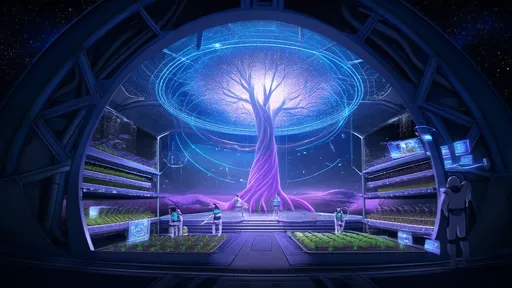
In Christopher Nolan’s 2014 cinematic masterpiece Interstellar, humanity’s survival hinges on the ability to cultivate food in the harsh environments of distant planets. The film’s depiction of self-sustaining ecological domes—massive, climate-controlled biospheres—was pure science fiction at the time. Yet, less than a decade later, the line between speculative fiction and reality is blurring. Researchers, aerospace engineers, and agronomists are actively developing closed-loop life-support systems that eerily resemble the Eden-like habitats of Interstellar’s Cooper Station.
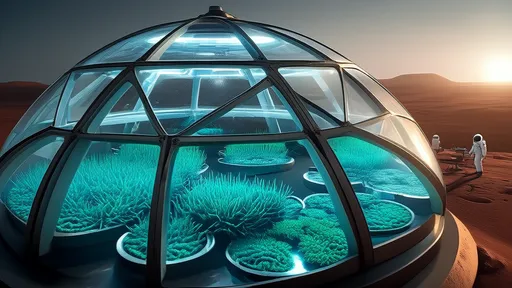
The underlying principle of these domes, both in fiction and reality, is straightforward: recreate Earth’s ecosystems in miniature. In the film, characters harvest cornfields under artificial skies, shielded from the toxic atmospheres of alien worlds. Today, analogous projects are underway, albeit on a smaller scale. The European Space Agency’s Melissa program, for instance, has spent three decades perfecting a closed ecosystem where microbes, plants, and humans coexist in a carefully balanced loop. Waste becomes food, carbon dioxide becomes oxygen, and nothing leaves the system. It’s a microcosm of Earth’s biosphere—one that could theoretically sustain astronauts on Mars.
What makes Interstellar’s vision so prescient isn’t just the technology itself, but the urgency behind it. The film’s dystopian Earth, ravaged by dust storms and crop blights, mirrors real-world anxieties about climate change and food security. Corporations like SpaceX and Blue Origin now openly discuss off-world agriculture as a contingency plan. Meanwhile, desert nations like Saudi Arabia are investing in vertical farming and hydroponics, recognizing that traditional agriculture may soon falter under rising temperatures. The ecological domes of sci-fi are no longer just about space colonization—they’re a potential lifeline for Earth itself.
One breakthrough bridging fiction and reality is the development of transparent, radiation-resistant nanomaterials for dome enclosures. In Interstellar, the domes appear to be made of glass or clear polymers, a design choice that prioritizes psychological well-being by allowing sunlight and views of space. Real-world researchers face the same challenge: how to let light in while blocking harmful cosmic rays. Recent experiments with graphene-based composites and self-healing silica gels show promise, potentially allowing future Martian greenhouses to withstand micrometeoroid impacts and solar flares.
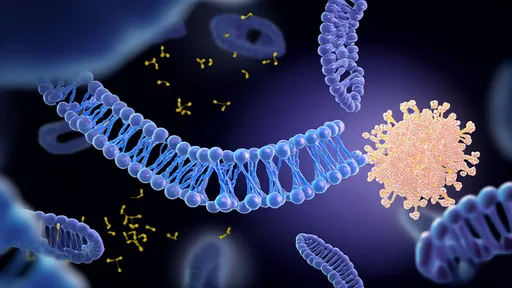
The film’s portrayal of crop diversity within the domes also aligns with modern astrobiology research. On Cooper Station, we see not just staple crops like corn, but complex polycultures—a nod to the importance of biodiversity in closed systems. NASA’s Veggie and Advanced Plant Habitat projects aboard the International Space Station have demonstrated that everything from zinnias to pak choi can thrive in microgravity. The next frontier? Genetically modified plants with enhanced photosynthesis efficiency, a technology already in development at labs like the Cold Spring Harbor Laboratory.
Perhaps the most haunting parallel between Interstellar and current research lies in the concept of time. The film’s time dilation near Gargantua serves as a narrative device, but it also underscores a practical dilemma: off-world colonies won’t have centuries to perfect their ecosystems. This explains the rush to develop AI-driven agricultural systems like those seen in the movie. Startups such as Iron Ox and Plenty are already employing machine learning to optimize growth conditions in real-time, adjusting variables from humidity to spectral light composition—sometimes with algorithms that "learn" faster than human farmers ever could.
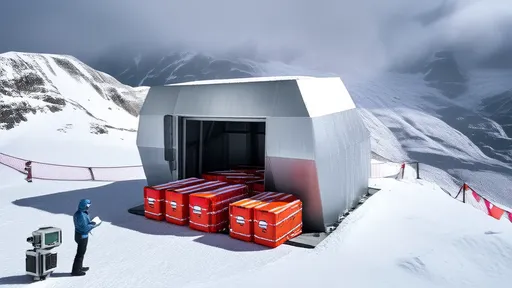
Critically, Interstellar’s domes aren’t just survival bunkers; they’re designed to feel like home. This psychological dimension is now a priority for organizations planning long-term space habitats. Biophilic design principles—incorporating natural shapes, water features, and even artificial circadian lighting—are being tested in Antarctica’s EDEN ISS greenhouse and other analog environments. The goal isn’t merely to keep astronauts alive, but to prevent the kind of existential despair that nearly dooms Matt Damon’s character in the film.
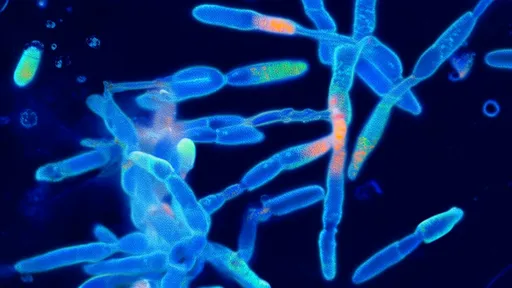
As with many sci-fi visions, the reality may diverge from Hollywood’s polish. Current prototypes are plagued by issues Interstellar glosses over: fungal outbreaks in closed systems, the energy cost of artificial gravity, and the social dynamics of isolated communities. Yet the trajectory is clear. When NASA’s Artemis program establishes a lunar base within this decade, its greenhouse modules will owe as much to cinematic imagination as to rocket science. The dream of walking through a thriving dome on an alien world, once confined to the silver screen, is now a question of when—not if.
Looking ahead, the legacy of Interstellar’s ecological domes may ultimately be philosophical. The film presents these structures as a temporary measure—a "bridge" until humanity can reclaim Earth. But with billionaires drafting plans for permanent orbital settlements, some worry we’re normalizing escape rather than stewardship. This tension between planetary conservation and interplanetary expansion will define the coming century. For now, the domes remain a powerful symbol: of human ingenuity, of desperation, and of our species’ uneasy relationship with the environments we create and destroy.

By /Aug 7, 2025
By /Aug 7, 2025
By /Aug 7, 2025
By /Aug 7, 2025
By /Aug 7, 2025
By /Aug 7, 2025
By /Aug 7, 2025
By /Aug 7, 2025

By /Aug 7, 2025
By /Aug 7, 2025
By /Aug 7, 2025
By /Aug 7, 2025
By /Aug 7, 2025
By /Aug 7, 2025
By /Aug 7, 2025
By /Aug 7, 2025
By /Aug 7, 2025
By /Aug 7, 2025
By /Aug 7, 2025
By /Aug 7, 2025
