In a groundbreaking move to combat mosquito-borne diseases, scientists are deploying drones to release sterilized male mosquitoes into high-risk areas. This innovative approach, part of an "ecological tactics" strategy, aims to suppress wild mosquito populations without resorting to harmful chemicals. The technique builds on decades of sterile insect research but leverages modern unmanned aerial technology for precision delivery.
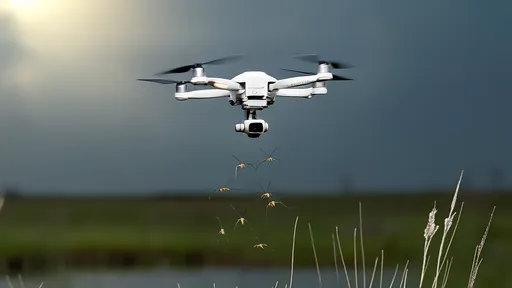
The method involves rearing millions of male mosquitoes in laboratories, sterilizing them with low-dose radiation, and then releasing them to mate with wild females. These unions produce no offspring, gradually reducing the overall population. What makes this initiative remarkable is its delivery system – specially adapted drones can now disperse these sterile males across vast or inaccessible areas with unprecedented efficiency.
Traditional mosquito control methods have hit their limits, facing challenges like insecticide resistance and environmental concerns. Chemical sprays kill beneficial insects along with mosquitoes and often fail to reach the hidden breeding sites where mosquitoes thrive. The sterile insect technique offers a more targeted solution, affecting only the specific mosquito species being targeted while leaving other organisms unharmed.
Field trials in tropical regions have shown promising results. In one pilot program, researchers achieved an 80% reduction in Aedes aegypti populations – the primary vector for dengue, Zika, and yellow fever – within six months of regular sterile male releases. The drone deployment allows coverage of 20-30 hectares per flight, a significant improvement over ground-based release methods that might cover just a few hectares per day.
The drone technology itself represents a major advancement. Early attempts to release sterile mosquitoes involved trucks or backpacks, which were labor-intensive and limited in range. Modern drone systems can carry up to 50,000 mosquitoes per flight in climate-controlled compartments that ensure the delicate insects survive the journey. Special release mechanisms gently disperse the mosquitoes at optimal altitudes to maximize their survival and mating success.
Researchers have developed sophisticated algorithms to determine the most effective release patterns based on wind conditions, temperature, and known mosquito habitats. The drones follow precise GPS coordinates, creating an even distribution of sterile males across the target area. This level of precision was unimaginable with traditional release methods and significantly improves the program's cost-effectiveness.
Beyond the technological achievements, this approach demonstrates how ecological understanding can lead to smarter pest control. By working with mosquito biology rather than against it, scientists have created a solution that becomes more effective as the wild population declines. Fewer wild mosquitoes mean each sterile male has a higher probability of finding and mating with a female, creating a downward spiral in reproduction rates.
The environmental benefits extend beyond eliminating pesticide use. Unlike chemical sprays that require repeated applications, the sterile insect technique can lead to lasting population suppression with decreasing intervention over time. Some trial areas have maintained low mosquito populations for years after the initial intensive release phase, requiring only occasional maintenance releases.
Public acceptance has grown as communities see the results firsthand. Early skepticism about "releasing more mosquitoes" has given way to support when people experience noticeable reductions in mosquito bites and disease cases. Educational programs explain that only male mosquitoes (which don't bite) are being released, addressing initial concerns about increased nuisance or disease risk.
Scaling up the technology presents challenges, particularly in establishing mosquito rearing facilities near target areas. The sterile insects must be healthy and competitive with their wild counterparts to be effective, requiring local production to avoid transportation stress. Several countries are now investing in mosquito "factories" that can produce millions of sterile males weekly to support large-scale programs.
Looking ahead, researchers are exploring ways to combine this technique with other biological controls. Some are investigating whether Wolbachia bacteria – which can inhibit virus transmission in mosquitoes – could be introduced alongside the sterility trait. Others are developing genetic markers to track released mosquitoes more effectively and refine release strategies based on real-time monitoring data.
This drone-assisted sterile mosquito program represents a convergence of entomology, engineering, and ecology. As climate change expands the range of disease-carrying mosquitoes, such innovative approaches will become increasingly vital for global health. The success of these early trials suggests we may be witnessing the dawn of a new era in vector control – one where precision ecological tactics replace blanket chemical assaults.
The implications extend beyond mosquito control. The same drone delivery system could potentially distribute other beneficial insects for agricultural pest management or conservation purposes. As the technology matures and costs decrease, we may see these ecological tactics applied to various insect-related challenges worldwide.

By /Aug 7, 2025

By /Aug 7, 2025

By /Aug 7, 2025

By /Aug 7, 2025
By /Aug 7, 2025
By /Aug 7, 2025

By /Aug 7, 2025
By /Aug 7, 2025

By /Aug 7, 2025

By /Aug 7, 2025

By /Aug 7, 2025

By /Aug 7, 2025

By /Aug 7, 2025

By /Aug 7, 2025

By /Aug 7, 2025

By /Aug 7, 2025

By /Aug 7, 2025

By /Aug 7, 2025

By /Aug 7, 2025
By /Aug 7, 2025
