In a groundbreaking fusion of biology and technology, researchers have unveiled an unprecedented virtual reality experience that transports users into the microscopic world of mitochondria. "VR Journey Through the Mitochondrion: Immersive Exploration of the ATP Factory" represents a quantum leap in scientific visualization, allowing students, researchers, and curious minds to navigate the intricate landscapes of cellular energy production like never before.
The experience begins with a breathtaking descent through the double membrane structure of the mitochondrion, where users immediately notice the organelle's dynamic nature. Unlike textbook diagrams, this VR environment reveals mitochondria as constantly undulating structures, their inner membranes folding and unfolding in response to cellular energy demands. The attention to detail extends to the thermal currents swirling through the intermembrane space, visualized as subtle heat waves affecting the movement of ions and molecules.
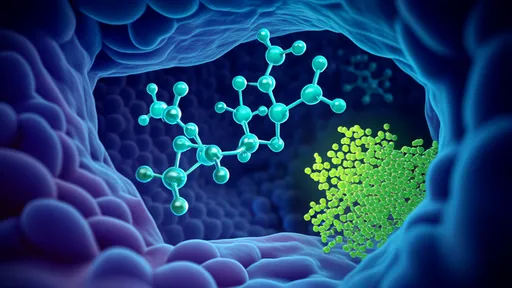
What sets this VR experience apart is its sophisticated simulation of electrochemical gradients. As users approach the inner mitochondrial membrane, they can literally see—and in some advanced setups, feel—the proton motive force building up across the cristae. The developers have created an ingenious visual representation of this invisible force, depicting it as cascading waterfalls of glowing particles flowing through ATP synthase complexes.
The centerpiece of the experience is undoubtedly the interactive ATP synthase module. Users can manipulate individual subunits of this molecular machine, observing in real-time how conformational changes in the F1 sector correlate with phosphorylation events. The simulation goes beyond static models by demonstrating how the binding change mechanism actually works, with each 120-degree rotation of the γ subunit triggering the release of newly synthesized ATP molecules.
Perhaps most impressive is the way the VR environment contextualizes mitochondrial function within the broader scope of cellular metabolism. As users explore, they witness shuttle systems transporting reducing equivalents from the cytosol, see the coordinated dance of TCA cycle enzymes in the matrix, and observe how mitochondrial networks dynamically fuse and divide in response to metabolic needs. This systems biology perspective helps users appreciate mitochondria not as isolated organelles but as integral components of cellular physiology.
The development team collaborated with leading biochemists to ensure unprecedented accuracy in their molecular dynamics simulations. Each protein complex in the electron transport chain is rendered based on the latest cryo-EM structures, with redox reactions visualized through carefully designed animations that maintain scientific fidelity while remaining accessible to non-specialists. The result is a rare combination of rigorous science and engaging storytelling.
Early adopters report profound "aha moments" when using the simulation. Medical students describe finally grasping chemiosmotic coupling after seeing proton gradients build and dissipate in real-time. Educators note how the experience helps overcome common misconceptions, such as the idea that electrons "flow" through respiratory complexes like water through pipes, when in reality they hop between prosthetic groups in precisely orchestrated sequences.
Beyond its educational value, the VR mitochondrion offers researchers a powerful new tool for hypothesis generation. The ability to "walk through" molecular-scale environments has already led to new insights about possible regulatory mechanisms at membrane contact sites between mitochondria and the ER. Some teams are experimenting with the platform to visualize how mitochondrial dysfunction manifests in diseases ranging from neurodegeneration to cancer.
The technical achievements behind this project are equally remarkable. To handle the computational demands of real-time molecular simulations, developers created novel algorithms that simplify quantum mechanical calculations without sacrificing accuracy. Their adaptive rendering system dynamically adjusts level of detail based on where users focus their attention, allowing complex biochemistry to unfold smoothly on consumer-grade VR hardware.
Looking ahead, the team plans to expand the experience with modules on mitochondrial DNA replication, quality control mechanisms like mitophagy, and the organelle's surprising roles in calcium signaling and apoptosis. A multiplayer version is in development that will let study groups explore mitochondria together, with instructor avatars able to highlight structures and demonstrate processes on demand.
This project exemplifies how immersive technologies are revolutionizing scientific communication. By translating abstract biochemical concepts into visceral, spatially organized experiences, VR helps bridge the gap between textbook knowledge and intuitive understanding. As one beta tester remarked, "After thirty minutes inside a mitochondrion, I felt like I'd gained years of study—I could finally see how all the pieces fit together."
The implications extend beyond academia. Pharmaceutical companies are exploring how such simulations could aid drug discovery, particularly for compounds targeting mitochondrial processes. Patient advocacy groups see potential for explaining complex metabolic disorders in ways that empower rather than overwhelm. And science museums worldwide are racing to incorporate the experience into their exhibits.
As VR hardware becomes more widespread and affordable, experiences like this mitochondrial journey promise to democratize access to cutting-edge scientific visualization. No longer confined to laboratories with million-dollar microscopes, the inner workings of life are becoming explorable to anyone with a headset and curiosity. This represents more than just a new teaching tool—it's a fundamental shift in how humanity perceives and interacts with the microscopic foundations of biology.
The mitochondrial VR project stands as a testament to what becomes possible when scientists, developers, and educators collaborate across disciplines. By combining rigorous attention to detail with creative approaches to spatial storytelling, they've created not just a simulation, but a new lens through which to comprehend the exquisite complexity of life at molecular scale.

By /Aug 7, 2025
By /Aug 7, 2025
By /Aug 7, 2025
By /Aug 7, 2025

By /Aug 7, 2025
By /Aug 7, 2025

By /Aug 7, 2025
By /Aug 7, 2025
By /Aug 7, 2025
By /Aug 7, 2025
By /Aug 7, 2025
By /Aug 7, 2025
By /Aug 7, 2025
By /Aug 7, 2025
By /Aug 7, 2025
By /Aug 7, 2025
By /Aug 7, 2025
By /Aug 7, 2025

By /Aug 7, 2025
By /Aug 7, 2025
