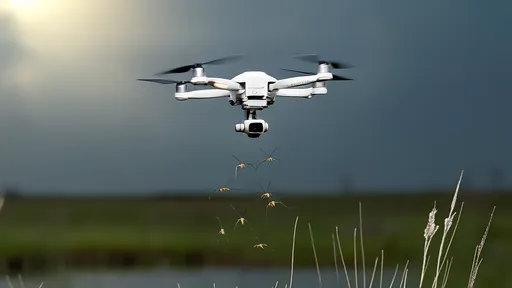
Telomere Life Extension Project": Targeted Delivery of Telomerase Activators

Aug 7, 2025 By

The quest to slow down or even reverse the aging process has taken a significant leap forward with recent breakthroughs in telomere extension technologies. At the forefront of this revolution is the emerging field of targeted telomerase activator delivery - an approach that could potentially rewrite our understanding of cellular aging and longevity.

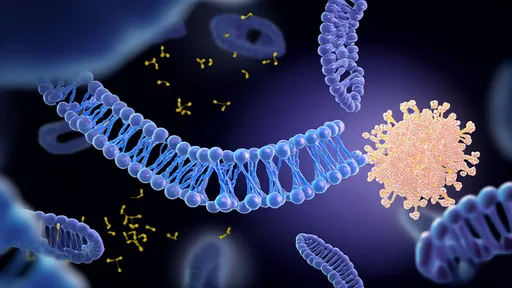
Telomeres, the protective caps at the ends of chromosomes, have long been recognized as the biological clock of cellular aging. With each cell division, these repetitive DNA sequences gradually shorten until they reach a critical length that triggers cellular senescence or apoptosis. This fundamental process underlies both the natural aging of organisms and various age-related diseases. The discovery of telomerase, the enzyme capable of rebuilding telomeres, opened new possibilities for intervening in the aging process at its most basic biological level.

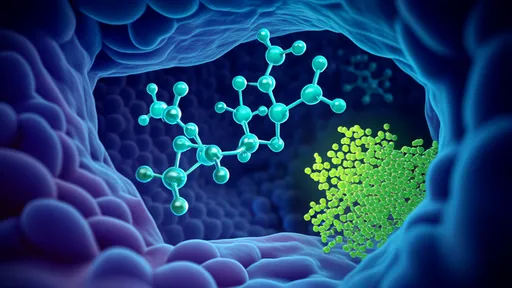
Recent advances in nanotechnology and targeted drug delivery systems have enabled scientists to develop precision approaches for activating telomerase in specific tissues and cell types. Unlike earlier broad-spectrum telomerase activation attempts that raised cancer concerns, these new targeted delivery methods aim to provide controlled telomere extension only where needed. Researchers are now engineering sophisticated carrier systems including lipid nanoparticles, viral vectors, and antibody-drug conjugates that can deliver telomerase-activating payloads to particular cell populations.

The implications of successful telomere "rejuvenation" therapies are profound. In cardiovascular tissue, targeted telomerase activation could help maintain the replicative capacity of endothelial cells and cardiomyocytes, potentially preventing or reversing age-related heart disease. For the nervous system, carefully controlled telomere extension in neuronal progenitor cells might open new avenues for treating neurodegenerative conditions. Even the immune system could benefit, as telomere maintenance in lymphocytes might preserve immune function in aging individuals.

One particularly promising approach involves tissue-specific promoters combined with advanced delivery vectors. These systems activate telomerase only in predetermined cell types, minimizing potential off-target effects. For instance, liver-specific nanoparticles carrying telomerase RNA components could theoretically rejuvenate hepatocytes without affecting other tissues. Similarly, myocardial-targeted viral vectors might deliver telomerase genes exclusively to heart muscle cells.

The development of small molecule telomerase activators has progressed significantly in recent years. Compounds like TA-65 (derived from astragalus root) and synthetic molecules such as TERT activators have shown ability to modestly increase telomerase activity in certain cell types. When combined with targeted delivery systems, these molecules could provide controlled telomere elongation without the risks associated with genetic modification approaches.

Perhaps the most exciting aspect of this research is its potential to address multiple age-related conditions simultaneously. Unlike treatments targeting specific diseases of aging, telomere extension at the cellular level could theoretically impact numerous aging processes in parallel. This systems-level approach aligns with growing recognition of aging as a unified biological process rather than a collection of separate disorders.

Safety remains a paramount concern, as uncontrolled telomerase activation could theoretically increase cancer risk. However, the latest generation of targeted delivery systems incorporates multiple safeguards, including tissue-specific activation, transient rather than permanent telomerase expression, and built-in kill switches should unwanted proliferation occur. These refinements aim to maximize therapeutic benefits while minimizing potential risks.

Clinical translation of these technologies is already underway, though still in early stages. Several biotechnology companies have initiated preclinical studies of targeted telomerase activation therapies for specific age-related conditions. While widespread human application may still be years away, the pace of progress suggests that telomere extension therapies could become a clinical reality sooner than previously imagined.

The economic and societal implications of successful telomere "rejuvenation" therapies would be enormous. By potentially extending healthspan - the period of life spent in good health - such treatments could transform healthcare systems and redefine retirement ages. They might also help address the growing burden of age-related diseases in an increasingly elderly global population.

Ethical considerations naturally accompany such powerful technologies. Questions about equitable access, appropriate use, and the broader consequences of life extension will need careful consideration as these therapies develop. The scientific community is increasingly engaging with ethicists and policymakers to establish guidelines for responsible development of longevity interventions.

Looking ahead, researchers anticipate combining telomere extension with other anti-aging strategies such as senolytic therapies, mitochondrial rejuvenation, and stem cell treatments. This multimodal approach may offer synergistic benefits, potentially leading to more comprehensive interventions against the aging process. The convergence of these technologies could mark the beginning of a new era in medicine focused on maintaining youthfulness rather than simply treating disease.

While challenges remain, the progress in targeted telomerase activation represents one of the most promising avenues in longevity research today. As delivery systems become more precise and our understanding of telomere biology deepens, we may be on the verge of fundamentally altering how humans experience aging. The coming decade will likely see these laboratory advances transition into clinical applications, potentially making controlled telomere extension a cornerstone of preventive medicine.

The telomere "life extension engineering" field stands at an exciting crossroads between basic science and clinical application. What began as fundamental research into chromosome structure has evolved into a sophisticated therapeutic strategy with the potential to transform human healthspan. As this technology continues to mature, it promises to redefine our relationship with aging and open new possibilities for living longer, healthier lives.

Recommend Posts
Biology

Laboratory Safety Red Line": Global Regulation of Gene Editing Technology

By /Aug 7, 2025

The global scientific community stands at a crossroads with the rapid advancement of gene-editing technologies. CRISPR-Cas9, once a revolutionary tool confined to laboratory experiments, now promises to reshape medicine, agriculture, and even ecosystems. Yet, beneath this dazzling potential lies a tangled web of ethical dilemmas and regulatory gaps that could determine whether humanity harnesses or is haunted by this power.
Biology

Coral Gene Bank": Ultra-Low Temperature Cryopreservation of Larvae Revival Program

By /Aug 7, 2025

In a groundbreaking effort to safeguard the future of coral reefs, scientists have launched an ambitious "Coral Gene Bank" initiative focused on cryogenically preserving coral larvae. This cutting-edge conservation strategy aims to combat the escalating threats of climate change, ocean acidification, and human activity that have pushed many coral species toward extinction. By storing coral genetic material at ultra-low temperatures, researchers hope to create a biological insurance policy for reef ecosystems worldwide.
Biology

Composting Eco-Theater": Visualizing the Entire Process of Kitchen Waste Degradation

By /Aug 7, 2025

In an era where sustainability is no longer a choice but a necessity, innovative approaches to waste management are capturing public imagination. One such concept—the composting "Eco-Theater"—transforms the mundane process of food waste decomposition into a captivating visual narrative. This immersive experience doesn’t just recycle scraps; it stages nature’s unseen alchemy as a performance, revealing how banana peels, coffee grounds, and wilted lettuce metamorphose into fertile soil.
Biology

Climate-Smart Crops: Gene Editing Enhances Root Flood Resistance"

By /Aug 7, 2025

In the face of increasingly erratic weather patterns driven by climate change, scientists are turning to genetic editing to develop "climate-smart crops" capable of withstanding extreme conditions. One of the most promising breakthroughs involves enhancing root systems to improve flood resistance—a critical adaptation as flooding becomes more frequent and severe in key agricultural regions.
Biology

DNA Environmental Detective": River Water Tracking Poachers' Biological Traces

By /Aug 7, 2025

In the dense rainforests of Central Africa, where poachers move like shadows and endangered species vanish without a trace, scientists have developed an unlikely crime-fighting tool: river water. By analyzing environmental DNA (eDNA) shed by animals and humans in waterways, researchers are now tracking poaching activities with unprecedented precision—turning rivers into silent witnesses against illegal wildlife trade.
Biology

Microbial Antibiotic Warfare": Observing Drug Resistance Evolution in Petri Dishes

By /Aug 7, 2025

In the silent battleground of petri dishes, an invisible war rages—one that could determine the future of modern medicine. Scientists are meticulously tracking the evolution of antibiotic resistance in bacteria, observing in real-time how these microscopic adversaries adapt to survive our most potent drugs. What begins as a routine experiment often unfolds like a high-stakes thriller, with colonies of bacteria mutating at alarming rates to overcome increasingly concentrated doses of antibiotics.
Biology

Doomsday Vault": Everest Seed Bank Combats Climate Catastrophes

By /Aug 7, 2025

High in the Arctic permafrost, buried deep inside a mountain on the remote Norwegian island of Spitsbergen, lies humanity's ultimate insurance policy against agricultural catastrophe. The Svalbard Global Seed Vault, often dubbed the "Doomsday Vault," represents one of the most ambitious biodiversity preservation projects ever undertaken. But this Arctic stronghold isn't alone in its mission - from the slopes of Mount Everest to the frozen landscapes of Antarctica, scientists are creating a global network of seed banks designed to withstand climate disasters, wars, and even asteroid impacts.
Biology

Plastic Enzyme Scissors": A New Pathway for Marine Microorganisms to Degrade PET

By /Aug 7, 2025

In a groundbreaking discovery that could reshape our approach to plastic pollution, scientists have identified marine microorganisms capable of breaking down polyethylene terephthalate (PET) using specialized enzymatic "scissors." This natural degradation process, observed in ocean environments, offers a promising new pathway for addressing the global plastic waste crisis without relying solely on industrial recycling methods.
Biology

DNA Fingerprint Art": Creating Scientific Portraits with Gel Electrophoresis

By /Aug 7, 2025

In a groundbreaking fusion of science and art, researchers and artists are collaborating to create stunning portraits using an unexpected medium: DNA. The technique, known as DNA "fingerprint painting," transforms the raw data of gel electrophoresis into visually striking images that resemble traditional portraits. This innovative approach not only showcases the beauty of molecular biology but also opens new avenues for public engagement with scientific concepts.
Biology

CRISPR Experiment Kit: Safe Editing of Yeast Fluorescent Protein Genes

By /Aug 7, 2025

The world of genetic engineering has taken another leap forward with the introduction of CRISPR experiment kits designed specifically for editing fluorescent protein genes in yeast. These kits, now available to researchers and educators alike, provide a hands-on approach to understanding the revolutionary CRISPR-Cas9 technology. By targeting the genes responsible for fluorescence in yeast, users can witness firsthand the power and precision of genome editing.
Biology

Telomere Life Extension Project": Targeted Delivery of Telomerase Activators

By /Aug 7, 2025

The quest to slow down or even reverse the aging process has taken a significant leap forward with recent breakthroughs in telomere extension technologies. At the forefront of this revolution is the emerging field of targeted telomerase activator delivery - an approach that could potentially rewrite our understanding of cellular aging and longevity.
Biology

Debunking Scientific Rumors: The Truth Behind DNA Memory Inheritance"

By /Aug 7, 2025

The idea that memories can be passed down through DNA—often referred to as "genetic memory" or "transgenerational epigenetic inheritance"—has long captured the public imagination. From science fiction to pop psychology, the notion that our ancestors' experiences might be etched into our genes persists as a tantalizing possibility. But what does the science actually say? Is there any credible evidence that memories can be inherited biologically, or is this just another myth dressed up in scientific jargon?
Biology

Biological Hacking Warning: A Record of the Real Risks of Self-Genetic Editing

By /Aug 7, 2025

The kitchen table glowed with an eerie blue light as the amateur biologist injected himself with CRISPR components ordered from an online forum. This scene, once confined to dystopian fiction, now plays out in basements and makeshift labs worldwide as the biohacking movement blurs the line between scientific exploration and reckless experimentation. The democratization of gene editing tools has unleashed a wave of DIY genetic modification that keeps medical ethicists awake at night.
Biology

Mars Oxygen Farm": Plan to Transform Extraterrestrial Soil with Cyanobacteria

By /Aug 7, 2025

The concept of establishing an "oxygen farm" on Mars using cyanobacteria to transform extraterrestrial soil represents one of the most ambitious and forward-thinking proposals in modern astrobiology. As space agencies and private enterprises set their sights on crewed missions to the Red Planet, the challenge of creating a sustainable human presence looms large. Among the many obstacles, the lack of breathable air stands out as a critical barrier—one that cyanobacteria, some of Earth’s oldest and hardiest organisms, may help overcome.
Biology

Science Fiction Becomes Reality: Analysis of the Ecological Dome Technology in 'Interstellar'

By /Aug 7, 2025

In Christopher Nolan’s 2014 cinematic masterpiece Interstellar, humanity’s survival hinges on the ability to cultivate food in the harsh environments of distant planets. The film’s depiction of self-sustaining ecological domes—massive, climate-controlled biospheres—was pure science fiction at the time. Yet, less than a decade later, the line between speculative fiction and reality is blurring. Researchers, aerospace engineers, and agronomists are actively developing closed-loop life-support systems that eerily resemble the Eden-like habitats of Interstellar’s Cooper Station.
Biology

Acoustic Whale Protection Net": Intelligent Buoys Establish Silent Corridors for Whales

By /Aug 7, 2025

In a groundbreaking effort to protect marine life, scientists and engineers have developed an innovative acoustic "whale protection network" using smart buoys to create silent corridors for cetaceans. This ambitious project aims to mitigate the harmful effects of underwater noise pollution, which has been increasingly disrupting the communication, navigation, and feeding patterns of whales and other marine mammals.
Biology

VR Mitochondrial Journey: An Immersive Experience of ATP Synthesis Factories"

By /Aug 7, 2025

In a groundbreaking fusion of biology and technology, researchers have unveiled an unprecedented virtual reality experience that transports users into the microscopic world of mitochondria. "VR Journey Through the Mitochondrion: Immersive Exploration of the ATP Factory" represents a quantum leap in scientific visualization, allowing students, researchers, and curious minds to navigate the intricate landscapes of cellular energy production like never before.
Biology

Nobel Prize Bellwether": Top Five Candidates for the 2025 Physiology Prize

By /Aug 7, 2025

The Nobel Prize in Physiology or Medicine remains the most prestigious accolade in the life sciences, and as 2025 approaches, speculation intensifies about which groundbreaking discoveries might be honored. Often referred to as the "Nobel Predictors," several key indicators—such as the Lasker Awards, Breakthrough Prizes, and Clarivate Citation Laureates—have historically foreshadowed the Nobel Committee's choices. This year, five research areas stand out as frontrunners, each with transformative implications for human health and biological understanding.
Biology

Urban Ecological Corridors": Vertical Forest Restoration Plan for Buildings

By /Aug 7, 2025

In the heart of our concrete jungles, a quiet revolution is taking root—literally. Across global megacities, architects and ecologists are collaborating on an audacious experiment: transforming skyscrapers into vertical forests that serve as "ecological bridges" between fragmented urban habitats. This isn't mere greenwashing with potted plants on balconies; we're witnessing the emergence of entire ecosystems suspended hundreds of feet in the air, where building facades breathe life back into suffocated cityscapes.
Biology

Eco-Tactic Mosquito Control: Drone Deployment of Sterile Male Mosquitoes"

By /Aug 7, 2025

In a groundbreaking move to combat mosquito-borne diseases, scientists are deploying drones to release sterilized male mosquitoes into high-risk areas. This innovative approach, part of an "ecological tactics" strategy, aims to suppress wild mosquito populations without resorting to harmful chemicals. The technique builds on decades of sterile insect research but leverages modern unmanned aerial technology for precision delivery.